
great egret

Sunken Meadow State Park, Kings Park, New York, July 18, 2026

Sunken Meadow State Park, Kings Park, New York, July 18, 2026

NYC has been a whole lot of crazy the past month, and I was way overdue for a day outside the city.  I get bonkers when I’m around concrete and people for too long without a complete disconnect from the human race.  The weather was calling for severe thunderstorms to go along with the heat wave and wildfire smoke from Canada we’ve all been breathing for the past week.  But according to the radar, the storms were supposed to roll into Manhattan and the surrounding areas later in the day.  Now, I know never to trust the weather, but I needed to get away for a few hours.

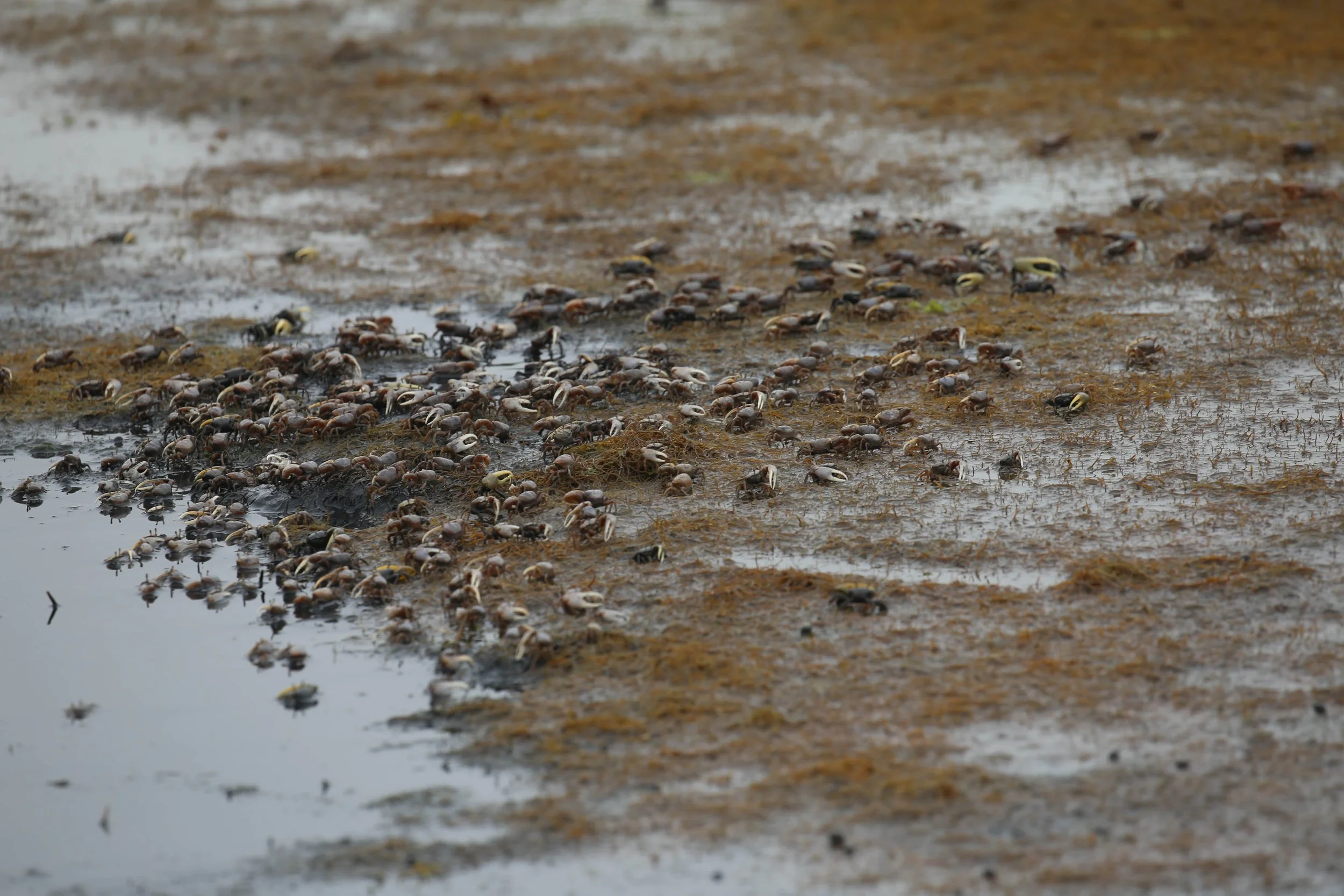
I checked the tide charts, and if we left in an hour, we’d arrive at Sunken Meadow at low tide, when all the little salt marsh and sea creatures would be washed ashore.  We got there at the perfect time. There were thousands, I’d even say millions, of fiddler crabs all over the salt marshes.  The males were waving their big claws to show off for the females and claim their territory.  It was fascinating to see so many of them.

I also saw hermit crabs, a totally different species than the kind the pet shop sold you when you were a kid growing up in the '70s.  There were so many more piping plovers and least terns than the last time we were here.  I could only gather that perhaps some of these were the offspring of the ones being protected inside the roped-off area, as they are both endangered.

As we walked, the sky started to darken, and it began to rain.  I could hear rolling thunder off in the distance, and it was getting closer.  We hastened our pace back to the car, and as we approached the boardwalk area, the lifeguard was shouting that lightning had been spotted.  Suddenly, it started to pour.  The ocean and the beach are so beautiful in stormy weather.  If it hadn’t been for the lightning, I would have stayed and enjoyed the rain.

It was a little after 1 pm, and we were hungry, so we drove to Northport Fish & Lobster.  There’s a small indoor seating area behind the market where you can sit and eat, and they’ll cook anything you want from the case.  Everything is fresh out of the sea.  While we were eating, lightning struck so loudly it shook the building.  I could hear a news reporter on the TV reporting flooding and hazardous conditions and telling people to stay off the roads.  Well, too late now. We were already out.  So we just took our time and hung out for a while.

It was still raining when we left, but we missed the worst of the storm.  Traffic wasn’t the best getting back into Manhattan, but we’re used to traffic anyway and weren’t in a hurry.  It was a really nice day despite the rain, which I rather enjoyed, and we came home with baked clams, clam chowder, and coconut shrimp to make later.

Click “Read More” below for more photos.

Read More
Jamaica Bay Wildlife Refuge, Broad Channel, New York, June 21, 2026

Jamaica Bay Wildlife Refuge, Broad Channel, New York, June 21, 2026

Jamaica Bay Wildlife Refuge is about a 45-minute drive from my apartment in Midtown East and is fairly easy to get to by car.  You can also take the train if you don't want to deal with driving, although it takes a little longer.  The refuge is located off Cross Bay Boulevard in Queens, near JFK Airport.

It's such a contrast to see a wild area like this with a major airport and the NYC skyline as its backdrop.

There are wide gravel paths that wind around the two man-made ponds, East Pond and West Pond.  The main trails are mostly exposed, but there are also some narrower side trails that branch off into shaded areas lined with hardwood trees.  There's also a lovely visitor center located near the entrance to the trails.

The refuge is considered one of the most significant bird sanctuaries in the Northeast, with over 330 bird species having been recorded here.  From the moment we arrived, I saw so many different species.  I turned on my Merlin app's Sound ID because I could barely keep up.  I saw tons of Laughing Gulls, Red-winged Blackbirds, Great Egrets, Snowy Egrets, Mute Swans, and all kinds of other gulls that I honestly haven't even begun trying to identify.

I was a little overwhelmed and probably didn't take as many photos as I should have because I was too busy watching.

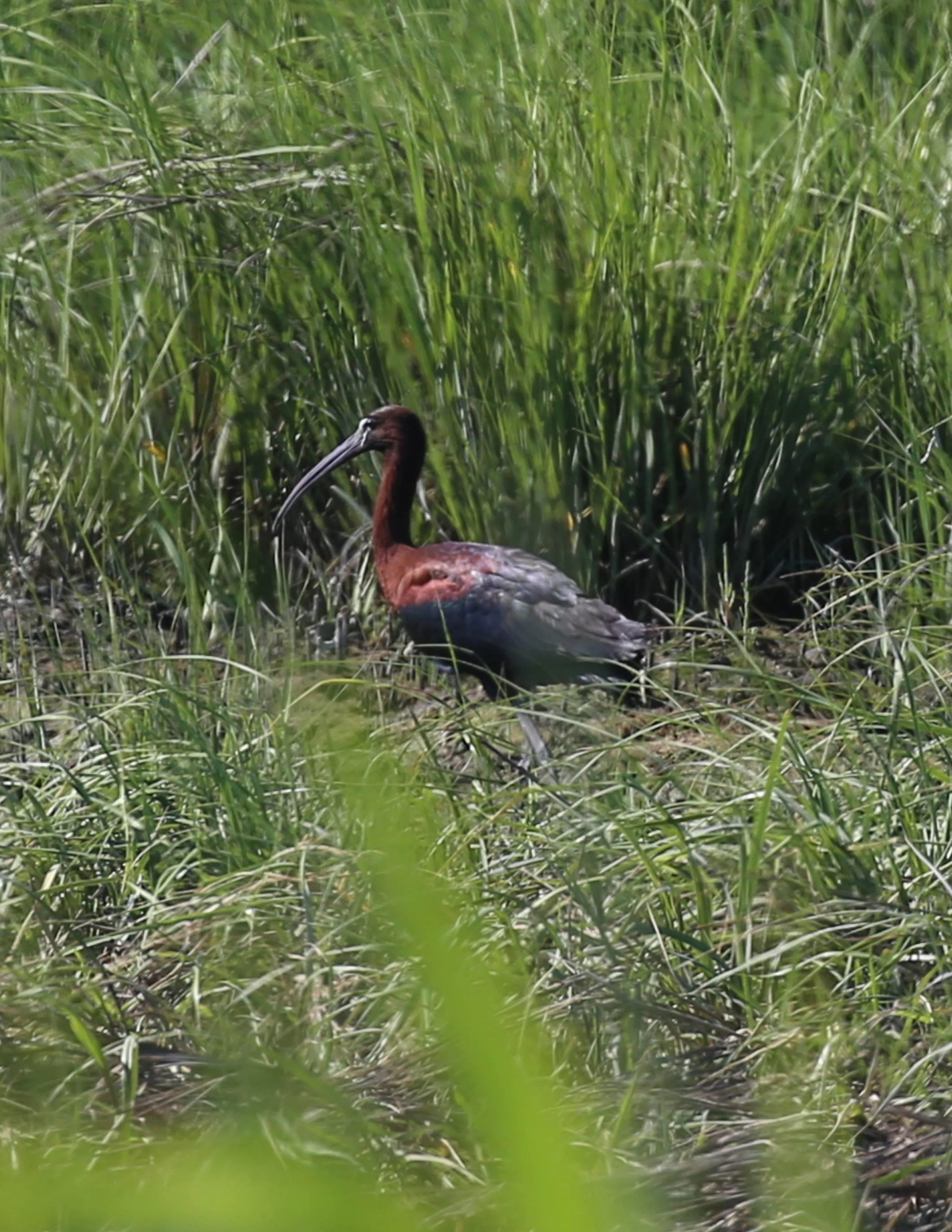
My favorite bird of the day was the Glossy Ibis.  My husband spotted one at the beginning of our walk wading through the muddy marsh.  I didn't even see it at first.  They are such unique-looking birds, with elegant curved bills and iridescent plumage that shimmers in emerald, bronze, and violet.

I associate this almost mythical-looking bird with Thoth, the ancient Egyptian deity associated with the moon, writing, magic, art, and judgment.  I was so happy to add the Glossy Ibis to my life list today.

Click “Read More” below for more photos.

Read More

Montauk, New York, Hither Hills State Park, Iodine Beach & Montauk Point State Park, June 14 and 15

Montauk, New York, Hither Hills State Park, Iodine Beach & Montauk Point State Park, June 14 and 15

Our first trip out to Montauk was so beautiful that I couldn’t wait to go back.  We drove out to Montauk on Sunday for an overnight stay.

Our first stop was Iodine Beach on the eastern shore of Napeague Harbor in Hither Hills State Park.  It’s quiet here.  It’s not a tourist spot, so there are fewer people, aside from the windsurfers and the occasional hikers on the Walking Dunes Trail.  We parked the car and headed out along the shore to see what kind of wildlife we’d find this time.  I was really hoping to see more horseshoe crabs, but this time we only found a few that had sadly died.

There were plenty of shorebirds to watch:  great egrets, willets, piping plovers, and countless gulls.  I love walking along the beach searching through rocks, shells, and whatever has been washed ashore by the sea.  We were there at low tide, and there were so many interesting things to discover.  I found several whelk shells, along with a whelk egg casing, also known as a mermaid’s necklace, that had washed up on the shore.

We walked about two miles to an area roped off to protect nesting piping plovers and least terns.  Salt-spray roses were blooming there in shades of pink and white.  Out on the water, I noticed what I think were oyster cages covered with shorebirds, mostly terns, perched on top while catching and eating small fish.  We didn’t see another person during the entire walk, and the breeze coming off the harbor kept us cool.

After our walk, we stopped for something to eat at a roadside restaurant along Montauk Highway in Amagansett called Clam Bar at Napeague.  I had a lobster roll that was packed with lobster and very delicious.  We then headed to our hotel, Daunt’s Albatross, to rest for a bit, but first we stopped for coffee and dessert at its restaurant across the street, Bird on the Roof.

It was a new moon, and I was really hoping to catch a glimpse of the breeding horseshoe crabs that come close to shore during high tide at Iodine Beach.  Before heading there, we drove out to Montauk Point to visit the lighthouse after dark.  I figured that since it was Sunday evening, we could enjoy it without the hordes of people who are usually there on weekends.  We stayed only a short time because the park officially closes after sunset before making our way back to Iodine Beach.

When we arrived, it was pitch dark, and high tide had covered the entire beach.  I don’t know what I was expecting, but we couldn’t even walk.  The beach was gone.  The ocean is such a mystery to me, and it was mind-boggling to see an entire beach disappear beneath the water.  Needless to say, we decided not to go searching for horseshoe crabs without knowing more about what we were doing.  Besides, we had a cozy hotel waiting for us and another day to look forward to in the morning.

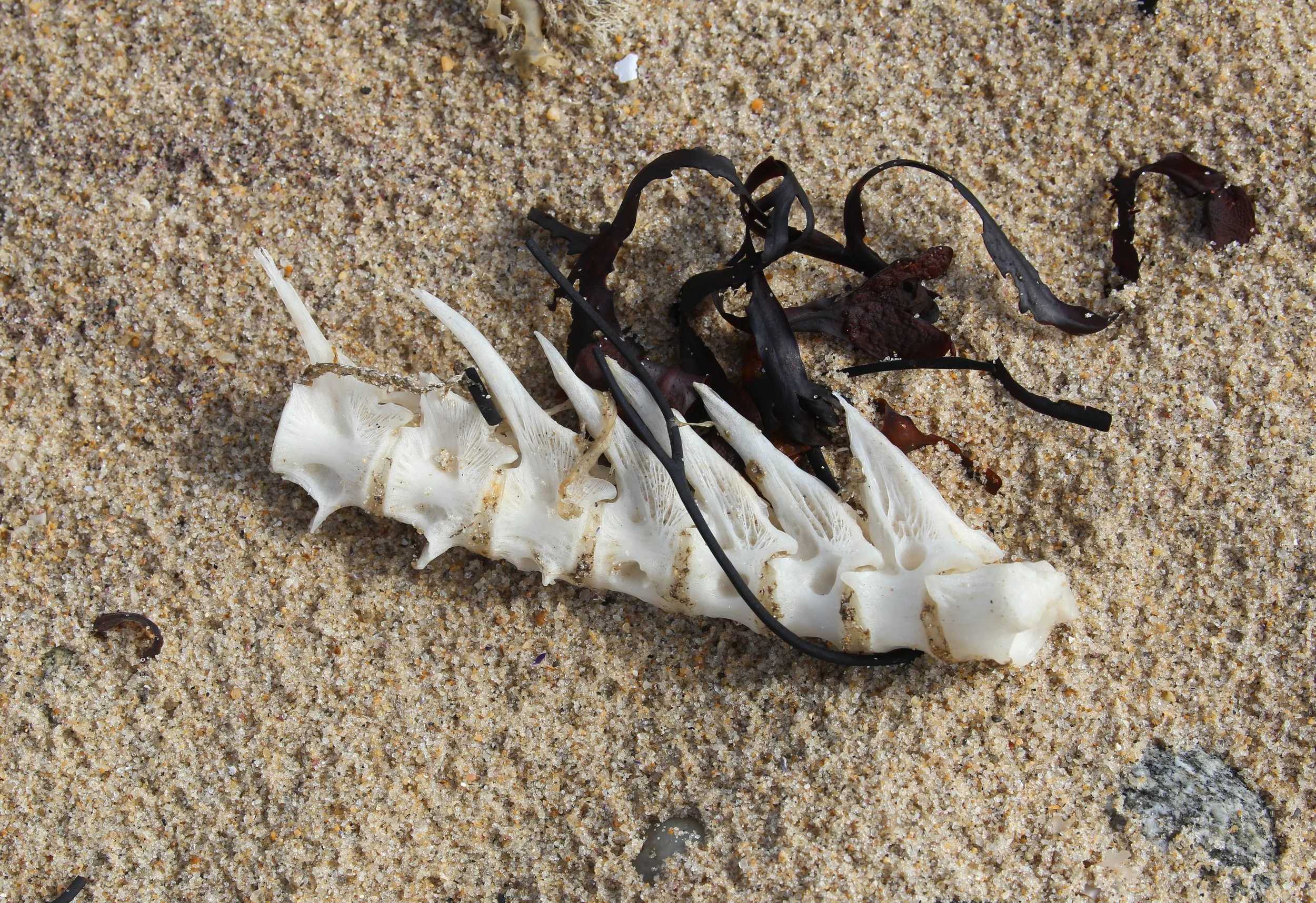
The following day, Monday, we drove back to Montauk Point State Park.  We hiked the Montauk Point Loop Trail in a counterclockwise direction.  I wanted to stay close to the water, so we headed toward the beach, where I saw people with campers set up along the shore.  We followed the rocky coastline, where there were plenty of interesting things to discover, including a huge fish bone that had washed ashore.

I also spotted bank swallows and the tunnels they had carved into the seaside cliffs.  Out on the ocean I saw half a dozen double-crested cormorants on a large rock.  The farther we walked beyond the campers, the wilder the coastline felt.  Eventually, we found a place to climb back up onto the trail and realized we were on the Seal Haul Out Trail.  During the winter and spring, different species of seals can often be seen lounging on the rocks below.  From there, we hiked back through a section of mostly hardwood forest until we reached the parking lot.

After the hike, it was still early.  We had just enough time for breakfast at Bird on the Roof and a shower before heading back to the city.

Click “Read More” below for more photos.

Read More